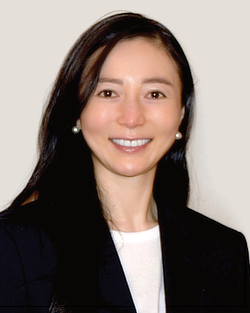
What does receiving this award mean to you?
The Kenneth A. Arndt, MD Lifetime Mentorship Award holds tremendous meaning for me. When I was a young dermatology resident at the Institute of Dermatology in London, the name ‘Dr Ken Arndt’ was truly inspiring, someone with rock-solid authority and grounded academic credentials. For two decades, he inspired the dermatology world as the editor-in-chief of one of its major journals, the Archives of Dermatology, and a leading light in energy-based devices. At the time, I would say he was somewhat intimidating; he spoke so intelligently, precisely, and honestly. Over time, I’ve come to know Ken as a friend and colleague. And he’s exactly as I had described him, only warm, funny, and intensely interested in you, and what he can do to help your career. To receive an award that bears his name is deeply humbling, and it means more than I can easily put into words.
What aspects of your background have contributed to the person you are today?
I have always felt that adversity is a more powerful stimulus than good fortune. I sometimes worry that effortless access to information, without the necessity of inquiry or “sweat equity,” may limit the development of deep intellectual habits in the next generation. Struggle, when constructive and supported, can teach focus, persistence, and humility.
I have dyslexia, and I suspect it played a significant role in the way I learned to work. As a student, I rarely finished examinations and seldom felt I fully understood the material without considerable effort. That experience shaped my instincts. It is no surprise that I gravitated toward skin surgery and lasers: I am an operator by nature, and I think best when I am engaged in a three-dimensional problem—tissue, repairs, devices, and outcomes. Over time, I learned to build systems around my weaknesses, to collaborate effectively, and, despite my early skepticism, to become a capable writer and a thoughtful editor.
In the end, dyslexia was not an excuse; it was an engine. It forced me to work harder, listen better, and value precision—especially in what we do with our hands and what we owe our patients.
How has your involvement with ASLMS impacted your career?
ASLMS has been a constant source of professional energy for me. It remains my favorite academic meeting of the year. The society brings together clinicians and scientists who are excited by innovation but committed to careful evaluation and ethical responsibility. From my earliest involvement, I found ASLMS unusually welcoming—open to new ideas, willing to debate them rigorously, and supportive of members across specialties and nationalities. It is a society driven by its members, guided by thoughtful leadership, and grounded in standards that matter. That combination has influenced the way I think, teach, and practice.
Why should young researchers and clinicians get involved with ASLMS?
ASLMS cannot be everything to everyone, but it serves a uniquely important role in our field by bridging clinical practice and science. Its journal, Lasers in Surgery and Medicine, reflects that same strength: rigorous, relevant, and open to thoughtful innovation.
For trainees and early-career physicians, the annual meeting is an especially valuable environment. It provides a credible and supportive platform for oral and poster presentations, and it offers the kind of exposure that helps young clinicians become visible to the community, receive constructive critique, and find mentors and collaborators. I tell residents and fellows that professional growth often begins with a simple discipline: show up, share your work, and learn to speak clearly about what you are doing and why. ASLMS is one of the best places I know to develop that habit.
What are some upcoming trends or innovations you are excited about in your area of expertise?
Several developments are particularly exciting to me. First is controlled hyperthermia. We have demonstrated, in studies at the University of California, Irvine and Henry Ford Medical Center, that controlled hyperthermia can render basal cell carcinomas histologically clear three months after treatment. We are now building on that foundation with improved thermal sensing and monitoring, which will make the next CHAMP (Controlled Hyperthermia and Monitored Protocol) study even more informative and, I hope, clinically transformative.
Second is the continued refinement of tissue fractionation using very fine-diameter channels, enabling greater precision with improved healing profiles.
Third is the evolution of combination strategies—particularly fractionated ablative laser surgery paired with topical biostimulators—where technique, timing, and biology may finally begin to align more predictably.
These are the kinds of innovations that ASLMS handles especially well: new ideas, examined carefully, and translated responsibly.
What is something that members may not know about you?
People often assume that retirement is a full stop. Mine has been more like a comma. I officially retired two years ago, yet I continue to see patients several days a week, teach, and remain actively involved in research. The parts of academic medicine that keep me engaged are the ones that matter most to me: time with the patients, the corridors outside (which are the thinking man’s laboratory), and the constant presence of trainees. Residents and fellows bring momentum, fresh questions, and an honesty that keeps you from becoming too comfortable in your own assumptions. In many ways, they have kept me intellectually young.
Outside of work, my family is my anchor. My wife and I have five children and six grandchildren, and I remain happily busy. We also have two dogs, Coda and Cali, who ensure that no day becomes too orderly. And perhaps the most revealing personal detail is this: though retired, I still genuinely enjoy going to work each day, mentoring the brilliant minds who come our way!